

Alcoholic Liver Diseases Treatment Market Led by Germany’s Growth Momentum; Pfizer,Novartis AG & Sanofi Drive Innovation
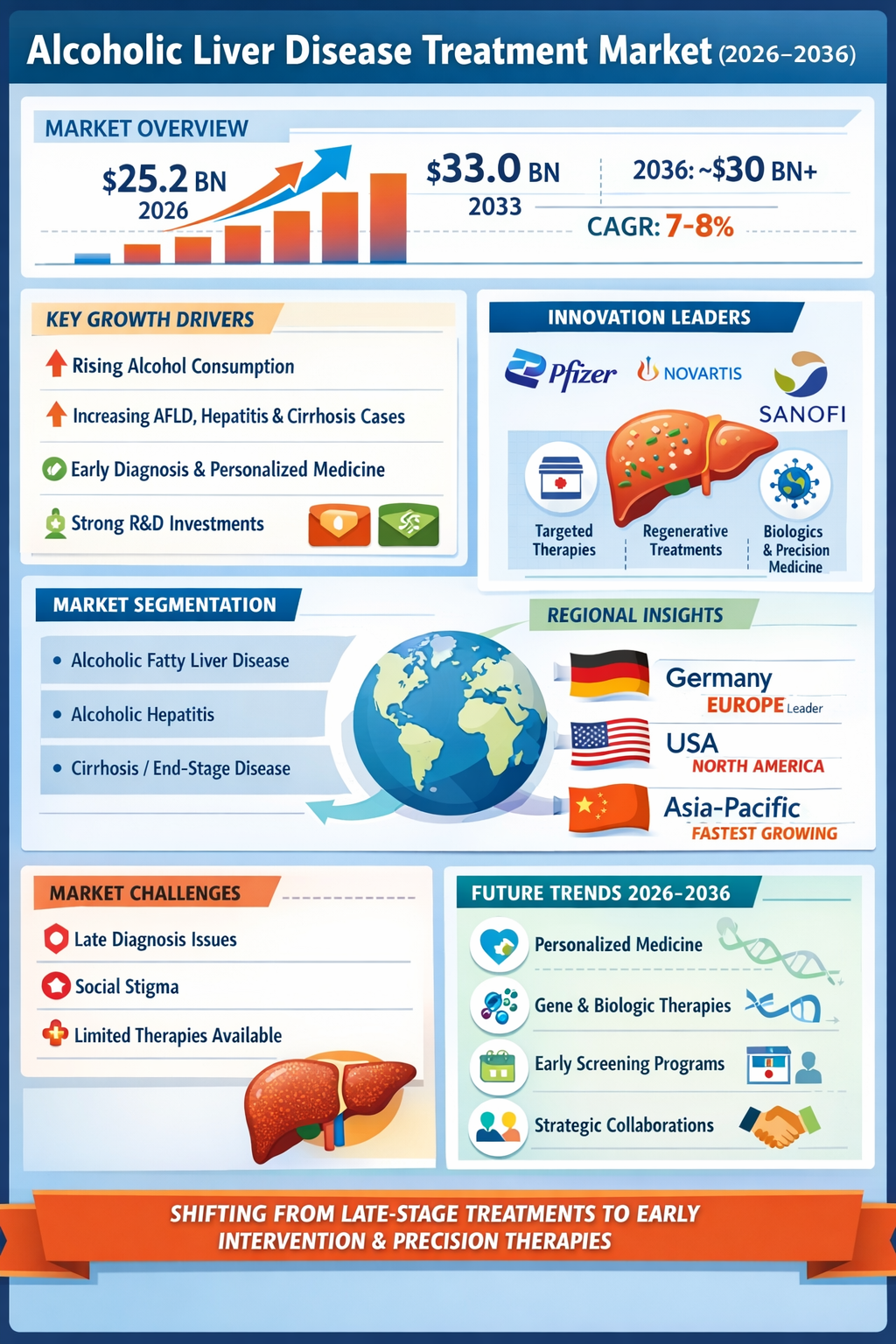
Alcoholic Liver Diseases Treatment Market
Rising alcohol consumption, increasing liver disease prevalence, and strong R&D investments reshape treatment landscape with robust long-term growth outlook
ROCKVILLE, MD, UNITED STATES, April 9, 2026 /EINPresswire.com/ -- According to the latest analysis by Fact.MR, the global alcoholic liver diseases (ALD) treatment market is valued at USD 3.2 billion in 2026 and is projected to reach USD 3.5 billion in 2027, expanding to approximately USD 6.1 billion by 2036. The market is expected to grow at a CAGR of 5.8%, creating an incremental opportunity of USD 2.9 billion over the forecast period.Get detailed market forecasts, competitive benchmarking, and pricing trends: https://www.factmr.com/connectus/sample?flag=S&rep_id=1393
The market is undergoing a significant transformation driven by shifting lifestyle patterns, increasing alcohol consumption, and advancements in pharmacotherapy. Germany, as a key European healthcare hub, is witnessing accelerated adoption of advanced therapeutic solutions, supported by strong healthcare infrastructure and regulatory alignment.
Quick Stats Section
Market Size (2026): USD 3.2 Billion
Market Size (2027): USD 3.5 Billion
Forecast Value (2036): USD 6.1 Billion
CAGR (2026–2036): 5.8%
Incremental Opportunity: USD 2.9 Billion
Leading Segment: Pharmacotherapy (Steroids & Drug-Based Treatments)
Leading Region: North America; Germany leading growth in Europe
Key Players: Johnson & Johnson Services Inc., Sanofi, F. Hoffmann-La Roche AG, Novartis AG, GlaxoSmithKline plc, Pfizer Inc., Bayer AG
Executive Insight for Decision Makers
The ALD treatment market is shifting from symptomatic management toward early diagnosis and targeted pharmacological interventions.
Strategic Imperatives:
Invest in novel drug development and biologics
Expand diagnostic capabilities and early screening programs
Strengthen regional supply chains, particularly in Europe
Risk of Inaction:
Loss of competitive positioning due to generic drug saturation
Reduced margins amid pricing pressures
Missed opportunities in emerging high-growth regions
Market Dynamics
Key Growth Drivers
Rising alcohol consumption and unhealthy lifestyle patterns
Increasing prevalence of chronic liver diseases globally
Government funding for R&D in liver disease therapeutics
Advancements in early detection and diagnostic technologies
Key Restraints
Side effects associated with existing medications
Stringent regulatory approval processes in Europe and globally
Limited awareness and diagnostic infrastructure in low-income regions
Emerging Trends
Growing adoption of nutritional supplements (e.g., betaine-based therapies)
Shift toward combination therapies
Expansion of generic drug markets increasing affordability
Integration of AI-driven diagnostics in liver disease detection
Segment Analysis
Leading Segment: Pharmacotherapy accounts for approximately 62% market share, driven by steroid-based and advanced drug treatments
Fastest-Growing Segment: Nutritional supplements and adjunct therapies
Breakdown:
By Treatment Type:
Steroids
Pharmacotherapy
Nutritional Supplements
By Application:
Alcoholic Hepatitis
Cirrhosis
Fatty Liver Disease
Strategic Importance:
Pharmacotherapy remains the cornerstone of treatment, while supplements are gaining traction as supportive care, especially in early-stage interventions.
Supply Chain Analysis (Critical Insight)
Raw Material Suppliers:
Chemical compound manufacturers
Biotech ingredient providers
Manufacturers / Producers:
Global pharmaceutical companies such as Bayer AG and F. Hoffmann-La Roche AG
Distributors:
Hospital supply chains
Retail and online pharmacies
Regional healthcare distributors in Germany and across Europe
End-Users:
Hospitals (primary buyers for acute treatments)
Specialty clinics (chronic disease management)
Patients (via retail pharmacies for long-term medication)
Who Supplies Whom:
Raw material suppliers → Pharma manufacturers → Regional distributors → Hospitals/Pharmacies → Patients
Germany plays a pivotal role as a distribution and innovation hub within Europe, ensuring efficient product flow and regulatory compliance.
Pricing Trends
Commodity vs Premium:
Generic drugs dominate as low-cost commodity offerings
Innovative therapies command premium pricing
Key Influencing Factors:
Raw material costs
Regulatory approvals (EMA standards)
Demand-supply dynamics
Patent expirations
Margin Insights:
Higher margins in patented drugs
Margin compression in generic segments due to competition
Regional Analysis
Top 5 Countries by Growth
United States (CAGR ~5.5%) – High disease prevalence and advanced healthcare
Germany (CAGR ~6.1%) – Strong healthcare infrastructure and rising lifestyle risks
France (CAGR ~5.7%) – Increasing R&D investments
China (CAGR ~7.2%) – Growing patient pool and improving diagnostics
India (CAGR ~6.8%) – Rapid urbanization and lifestyle changes
Regional Insights
Developed Markets: Focus on innovation and advanced therapies
Emerging Markets: Growth driven by rising awareness and access to treatment
Germany stands out as a key European growth engine, supported by regulatory efficiency and pharmaceutical innovation.
Competitive Landscape
Market Structure: Moderately fragmented with strong presence of global players
Key Companies
Pfizer Inc.
Novartis AG
Sanofi
GlaxoSmithKline plc
Bayer AG
Competitive Strategies
Investment in R&D and clinical trials
Expansion into emerging markets
Strategic partnerships and acquisitions
Pricing optimization and portfolio diversification
Strategic Takeaways
For Manufacturers:
Focus on innovative and combination therapies
Strengthen European footprint, especially in Germany
For Investors:
Target companies with strong R&D pipelines
Explore emerging markets with high unmet needs
For Marketers & Distributors:
Enhance awareness campaigns
Build strong hospital and pharmacy networks
Future Outlook
The market is expected to transition toward precision medicine and early-stage intervention strategies.
Increased role of biotechnology and AI-driven diagnostics
Growing emphasis on preventive healthcare and lifestyle management
Sustainability and cost-efficiency will shape long-term strategies
Germany is poised to remain a strategic hub for innovation and distribution in Europe.
Unlock 360° insights for strategic decision making and investment planning: https://www.factmr.com/checkout/1393
To View Our Related Report:
Liver Cancer Diagnostics Market: https://www.factmr.com/report/73/liver-cancer-diagnostics-market
Liver Disease Diagnostics Market:https://www.factmr.com/report/liver-disease-diagnostics-market
Liver Disease Therapeutics Market:https://www.factmr.com/report/liver-disease-therapeutics-market
Liver Metastasis Treatment Market:https://www.factmr.com/report/liver-metastasis-treatment-market
S. N. Jha
Fact.MR
+1 628-251-1583
email us here
Legal Disclaimer:
EIN Presswire provides this news content "as is" without warranty of any kind. We do not accept any responsibility or liability for the accuracy, content, images, videos, licenses, completeness, legality, or reliability of the information contained in this article. If you have any complaints or copyright issues related to this article, kindly contact the author above.
